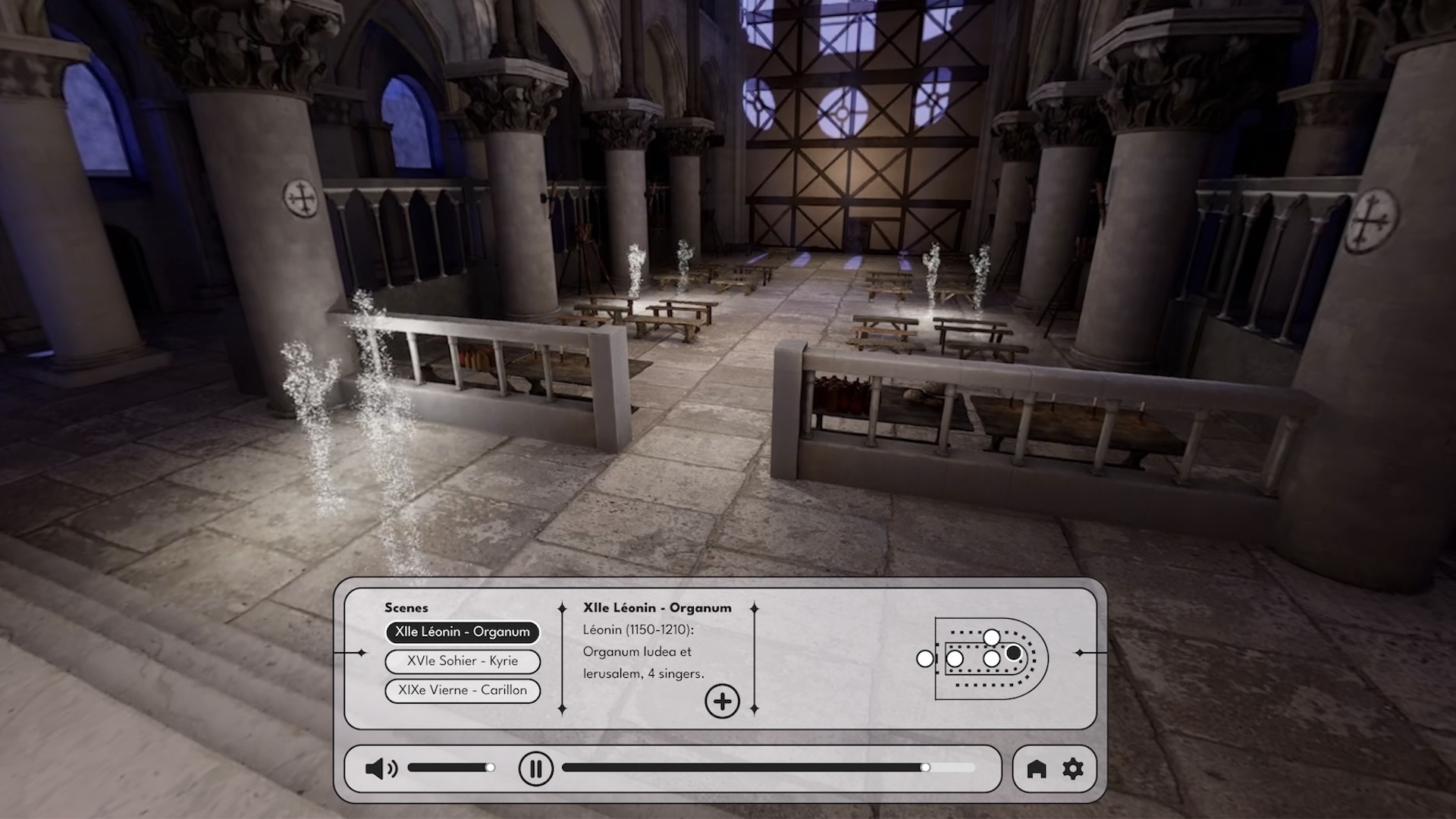
Vaulted Harmonies (2026)
Vaulted Harmonies is an animated feature film that takes the audience on a journey through eight centuries of Notre-Dame de Paris. Combining historical research, architectural reconstruction, room acoustics simulation, musical performance, and spatial audio, the project aims to let viewers experience how the cathedral may have looked and sounded throughout its history.
Experience the concert in binaural (wear headphones)
The project brought together historians, musicologists, acousticians, musicians, and an animation studio (Dada! Animation). My role was to direct the production, create the storyboards and camera trajectories, coordinate the different workflows, and supervise the final auralisation process.
How do you stage eight centuries of Notre-Dame?
The premise sounded simple enough: select musical works associated with Notre-Dame, reconstruct the cathedral as it may have appeared at the time, and place the audience inside the performance. Reality, unsurprisingly, was slightly more complicated. Each musical piece required its own historical reconstruction, visual environment, musician placement, acoustic simulation, and camera path. Rather than presenting the audience with a fixed concert from a single seat, we wanted them to travel through the building, moving between musicians, architectural details, and different listening positions.
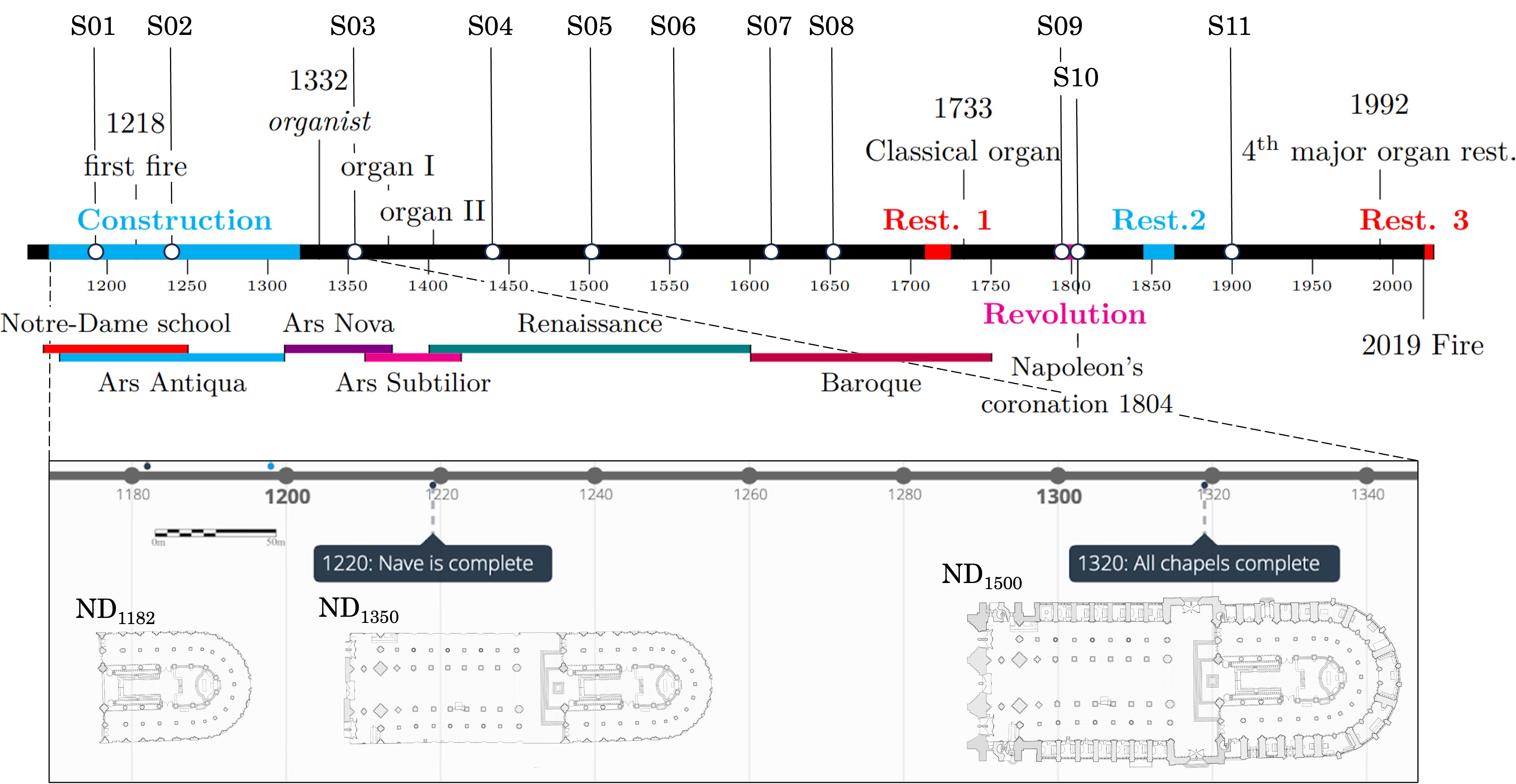
Timeline of the musical and architectural periods represented in the film (scenes 1 to 11)
Building the cathedral(s)
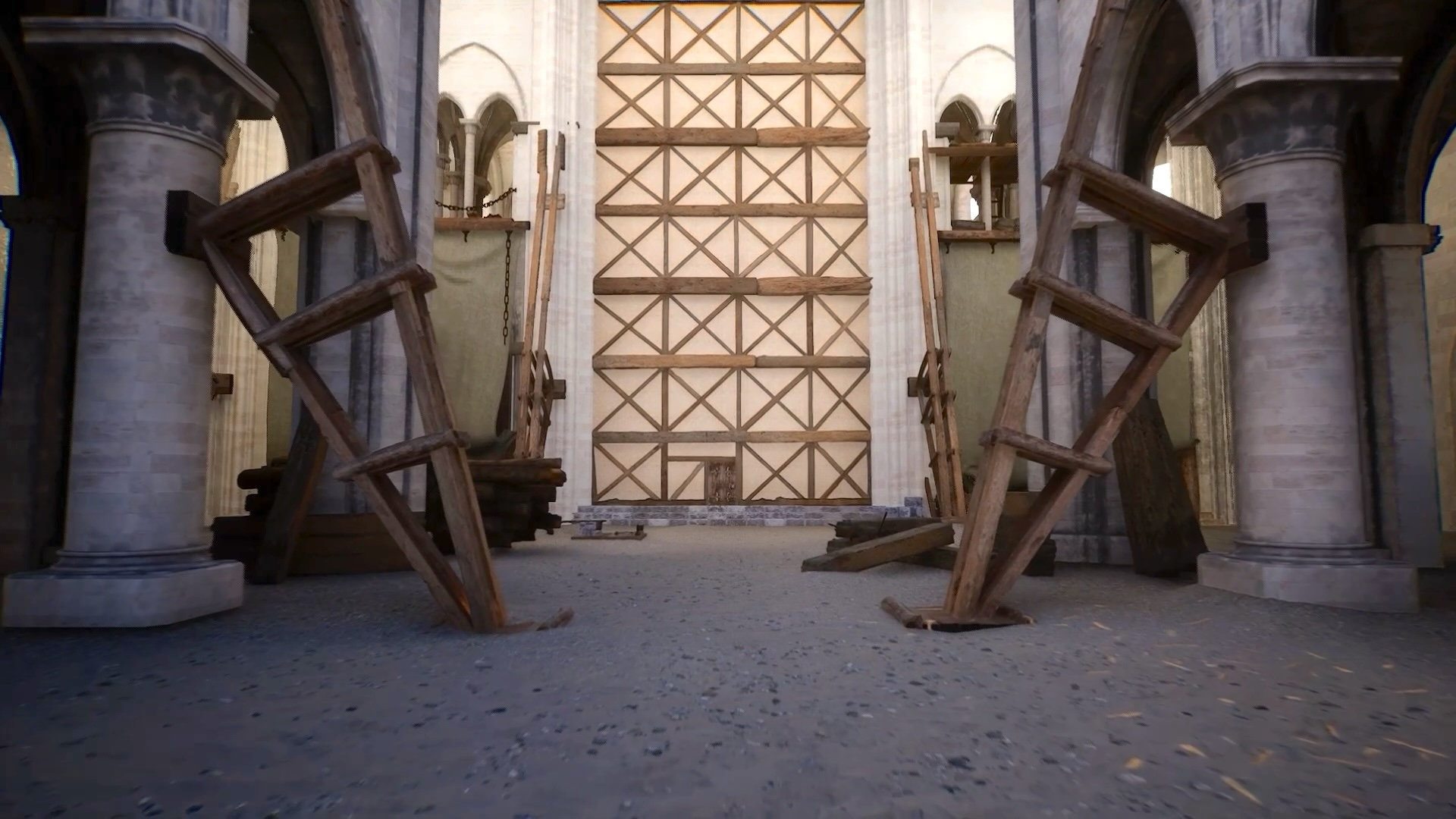
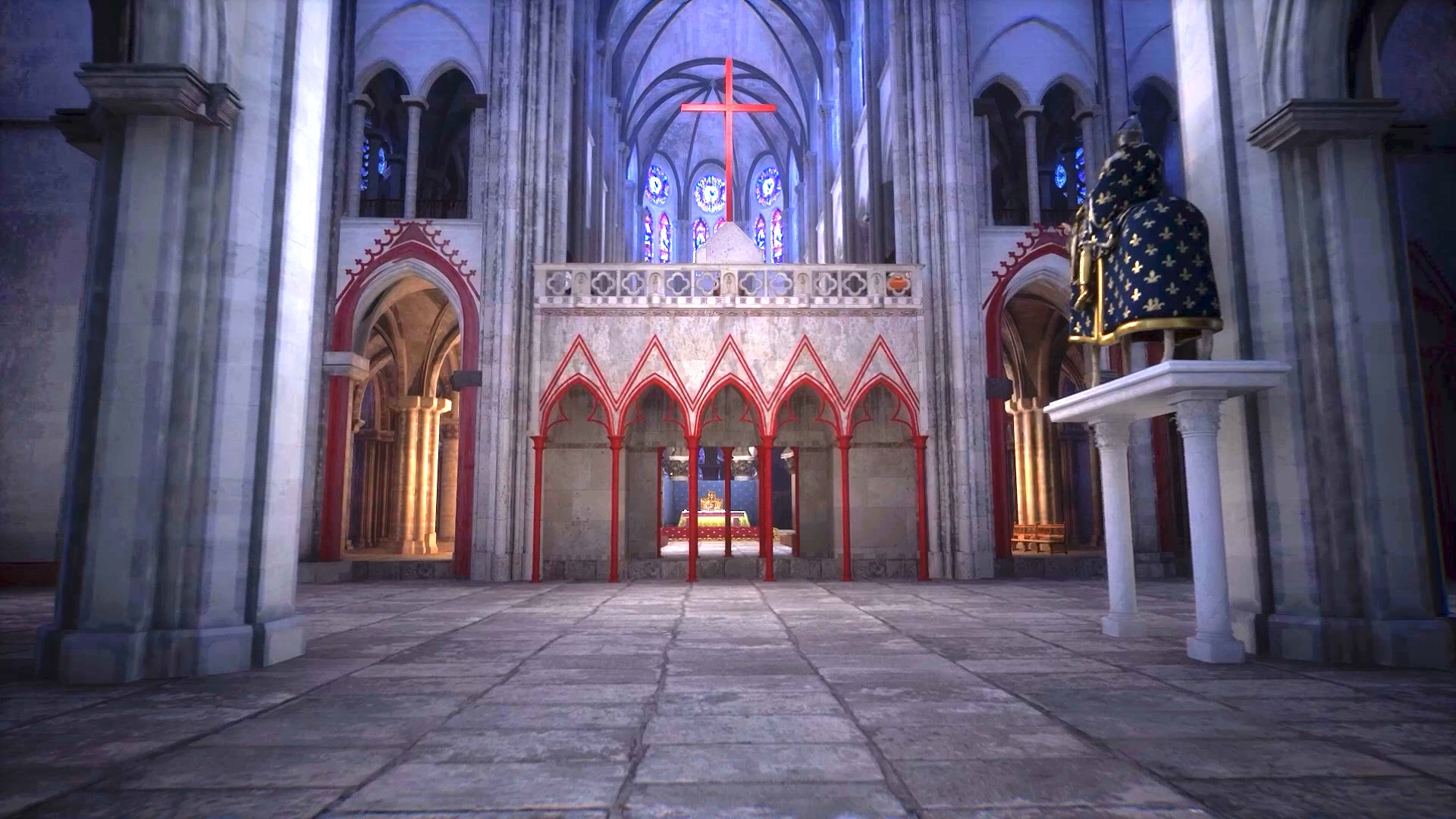
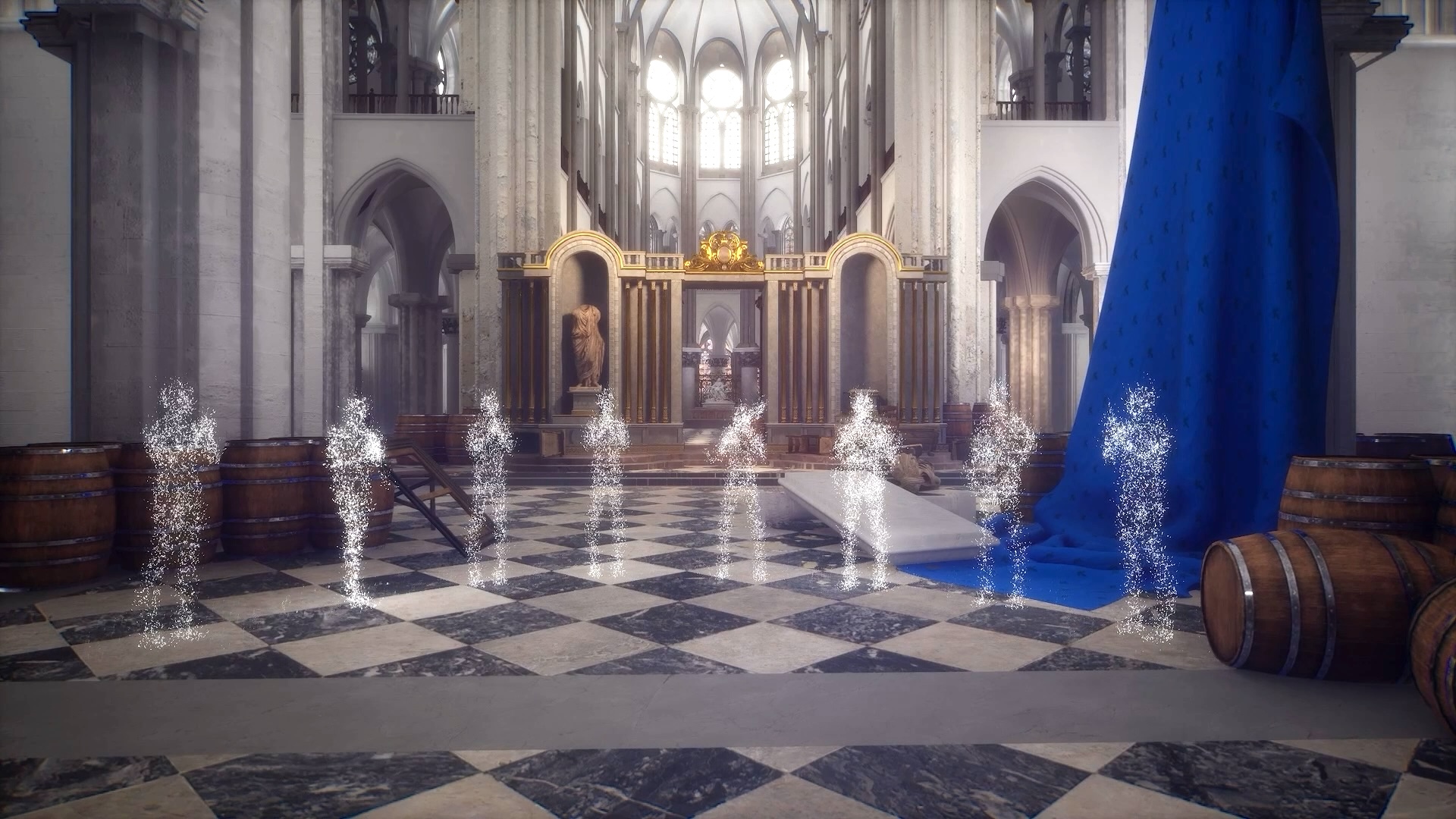
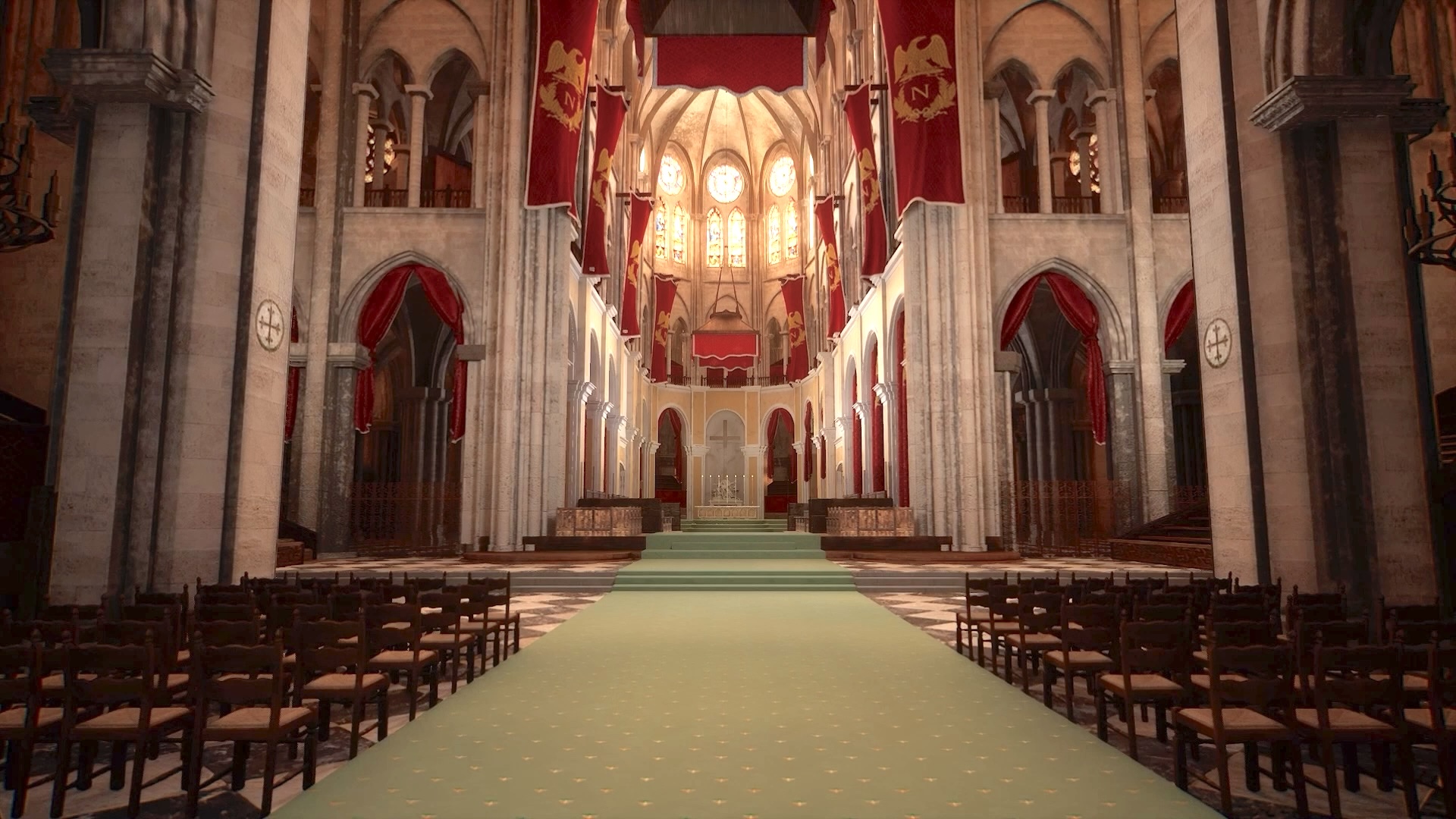
One of the peculiarities of the project is that there is not one Notre-Dame in the film, but many. The cathedral evolved continuously throughout its history, and each scene required a version consistent with the selected musical repertoire. Working from historical and archaeological research, the graphic team at Dada! Animation Studio recreated the cathedral across multiple periods, from the medieval construction phases to the 19th-century restorations. Every modification had consequences, not only visually, but acoustically as well. Keeping all these versions coherent while dozens of assets were being produced in parallel quickly became one of the project's central challenges.
Evolution of Notre-Dame across the centuries (same camera viewpoint)
Recording the musicians
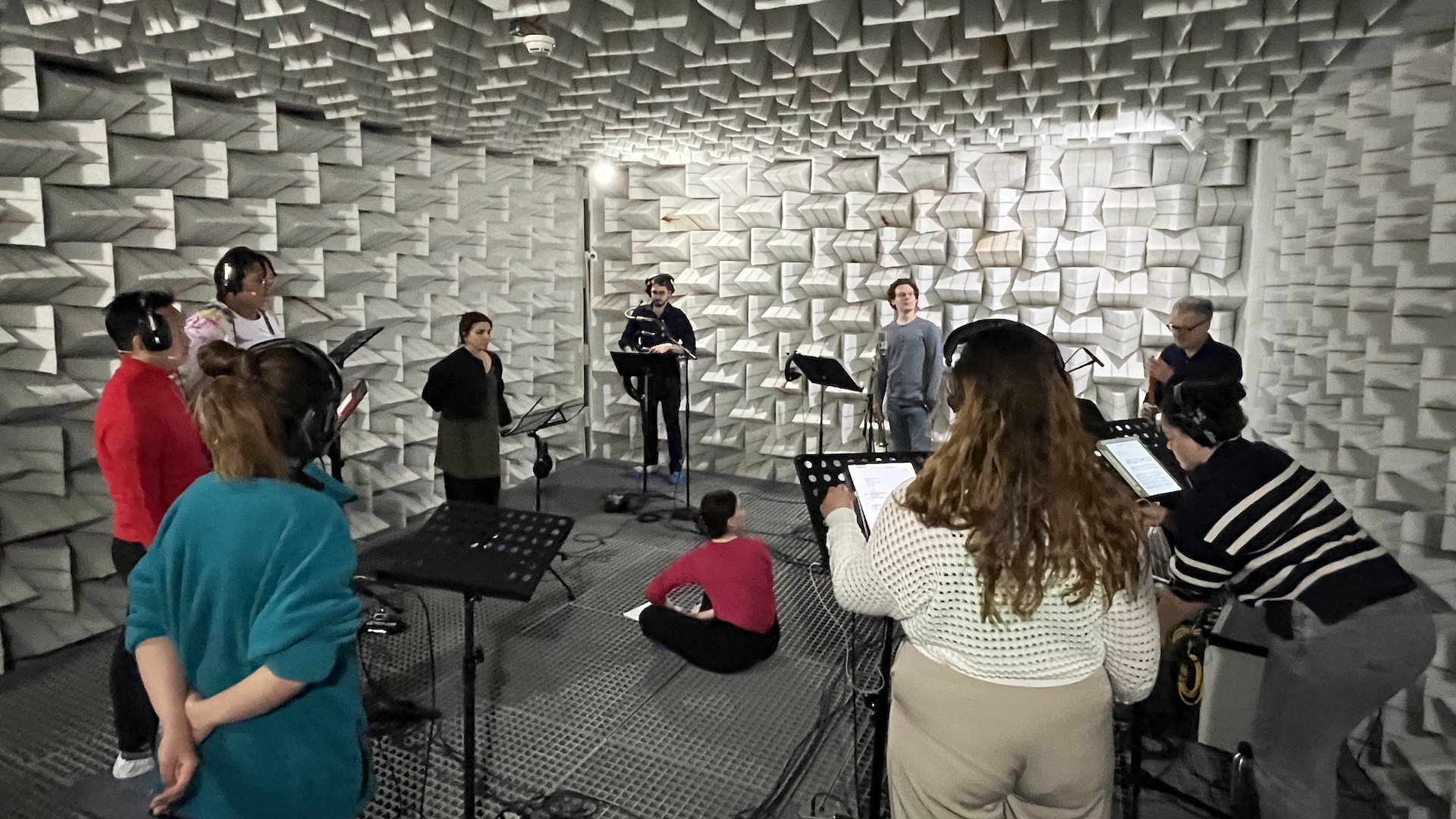
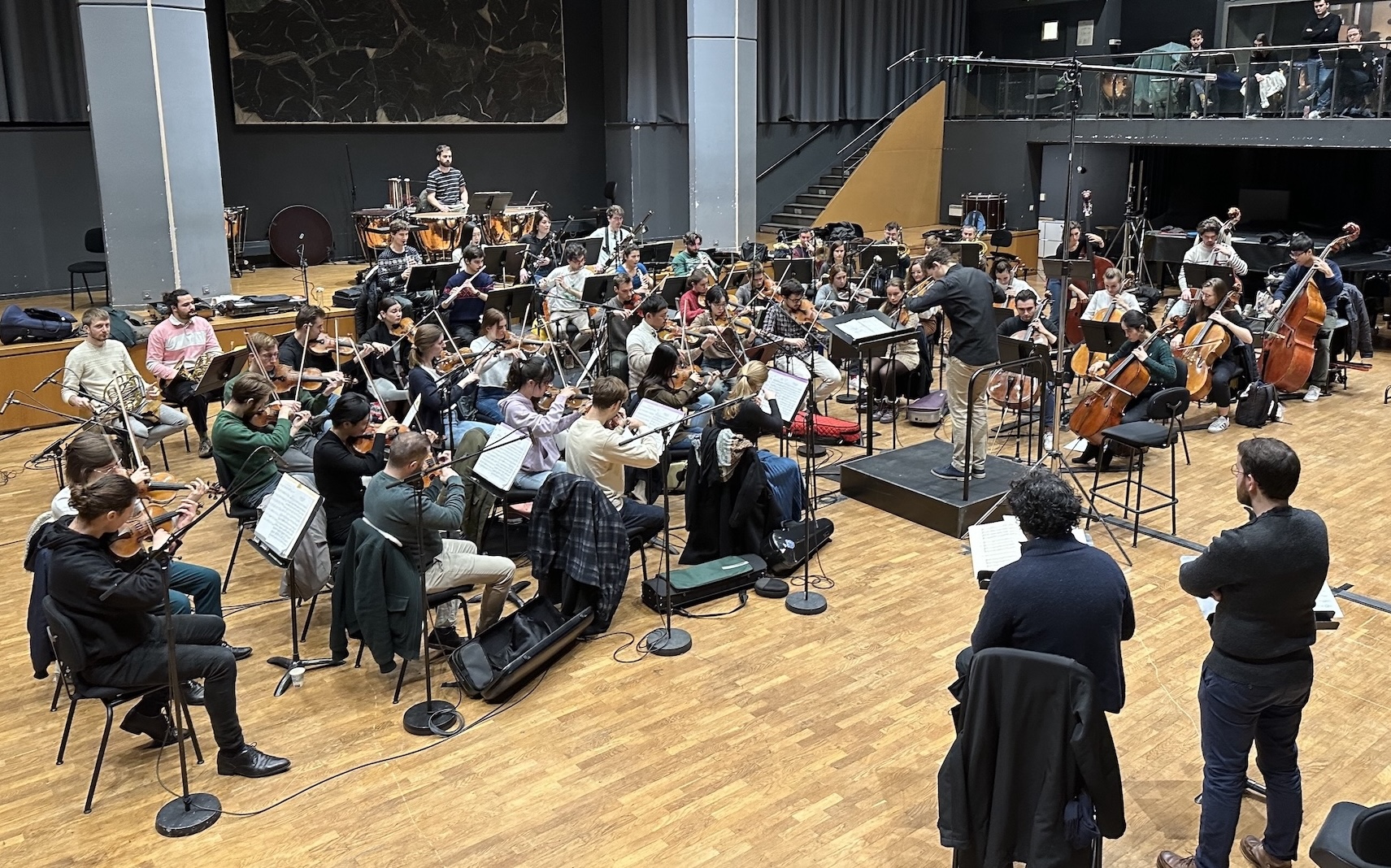
To place musicians inside the virtual cathedral, we first needed recordings that were as dry as possible. Choirs, soloists, instrumental ensembles, and organs were therefore recorded in a variety of spaces ranging from anechoic rooms to studio environments and historical venues. By the end of production, the project involved more than one hundred musicians and hundreds of individual tracks that would later be assembled inside the virtual cathedral.
Anechoic recording session
Recording larger ensembles
Storyboarding the journey
Long before the final renders existed, the film already existed as a collection of rough storyboard scenes. These preliminary versions were used to define camera movements, pacing, transitions between periods, and listening positions. The challenge was to balance several objectives at once: show the architecture, highlight the performers, maintain historical consistency, and create camera paths that remained acoustically meaningful. A beautiful shot is not necessarily a good listening position.
Making the cathedral sing
Once the visual and musical material was ready, it was time to bring the acoustics to life. The room impulse responses used throughout the film were simulated from historical acoustic models of Notre-Dame. My role was then to transform these simulations into dynamic auralisations that followed the camera as it moved through the cathedral. This meant synchronising camera trajectories, musician positions, and spatial audio rendering for every scene. Rather than listening from a fixed seat, the audience continuously moves through the building, causing the acoustic perspective to evolve along the way. The final mixes were produced in Reaper using dynamic convolution workflows I developed for the project, allowing the acoustics to evolve continuously throughout the film.
Overview of the production workflow

Premiere night
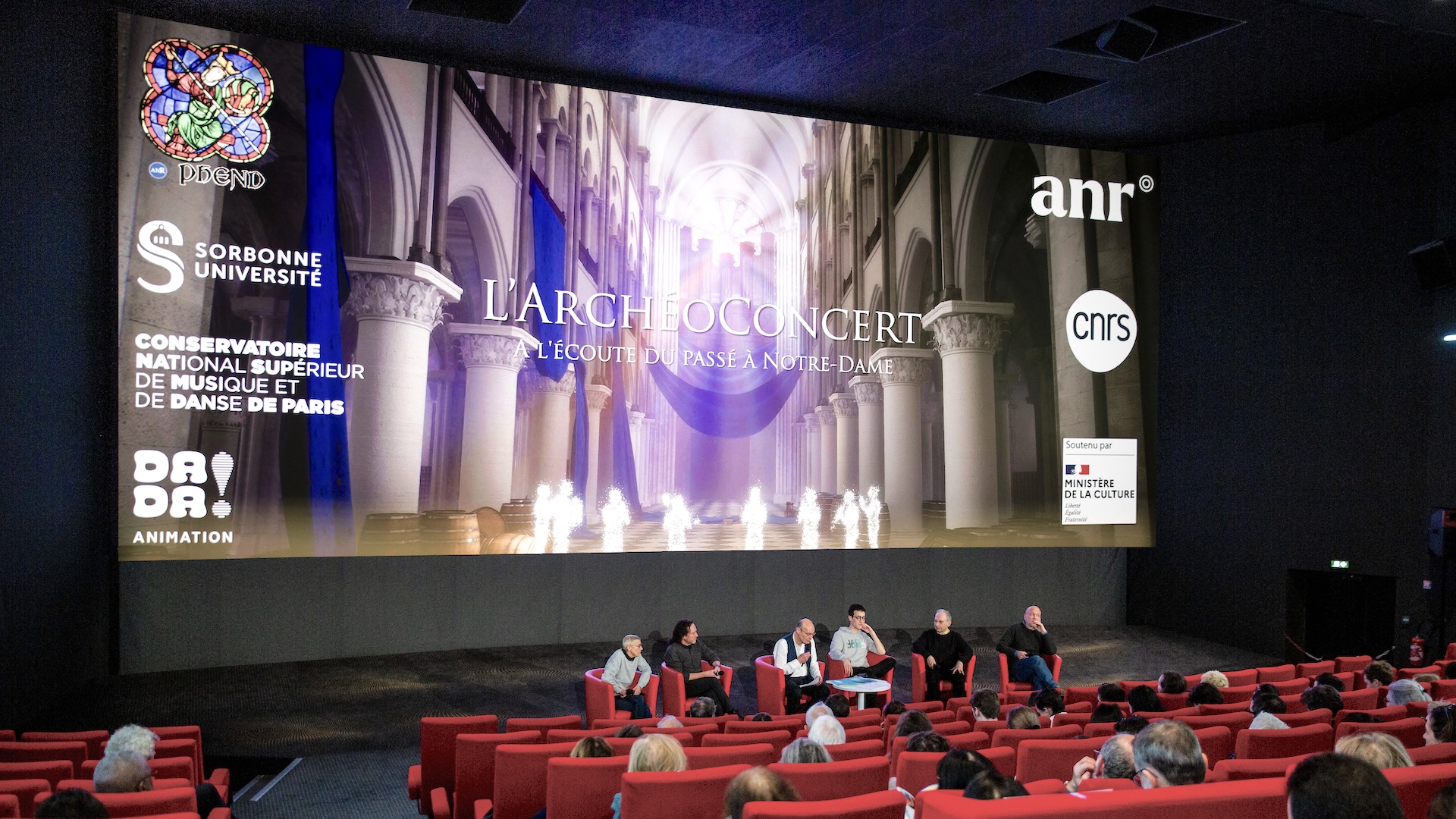
The finished film premiered during UNESCO's 2025 Sound Week in Paris. It took place in the Pathé Wepler Cinema, in a room equipped with a first-generation Dolby Atmos cinema system featuring five screen loudspeaker channels, three subwoofers, and forty surround loudspeaker channels.
Premiere screening
What happened next
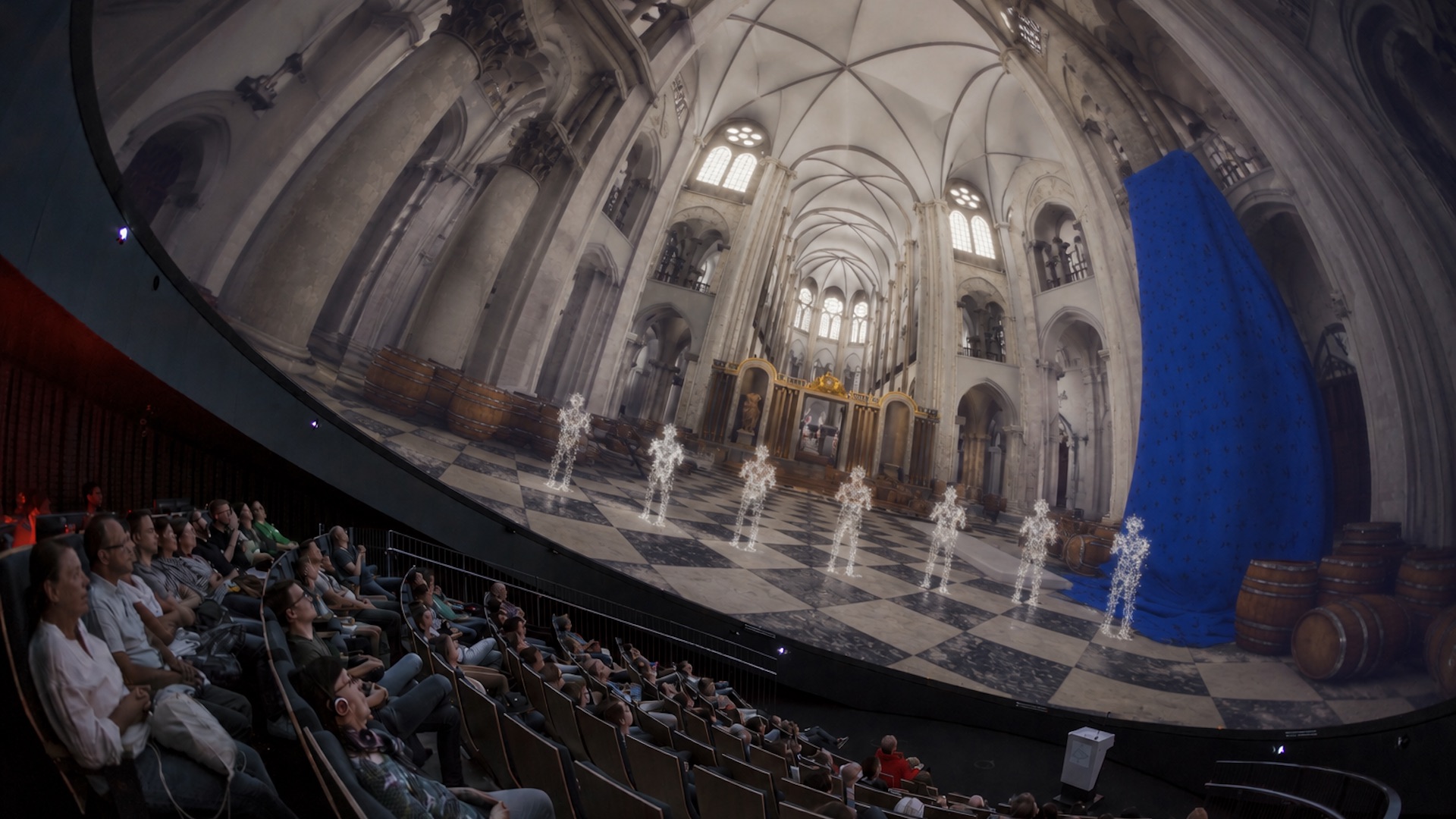
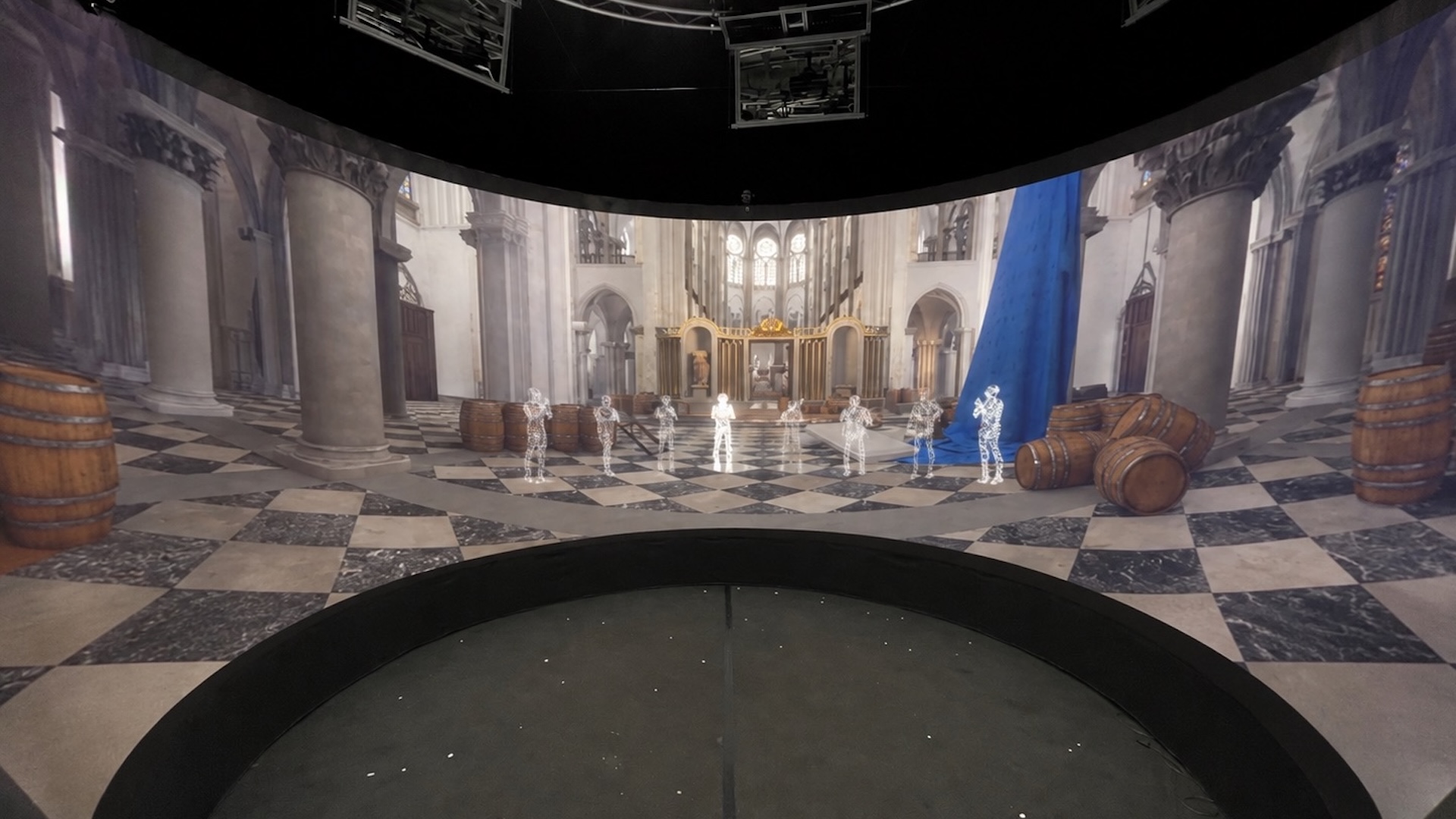
The film was only the beginning. Because the project was built from detailed 3D scenes and spatial audio renderings, it naturally opened the door to other formats. Since the premiere, we have adapted Vaulted Harmonies for dome projection, virtual reality, and web-based experiences. Each platform required its own workflow and compromises, but all shared the same objective: making Notre-Dame's acoustic heritage accessible beyond the walls of the cathedral itself.
Planetarium of Cité des Sciences et de l'Industrie, Paris
Coraulis platform, ENSA Nantes School of architecture
Web interactive experience